
- Dental Services
Anxious About Oral Surgery in Cold Lake?
We help you understand what may be needed, what comfort options may be available, and how your care can be planned before you move forward.
Oral surgery starts with understanding, not pressure
Dental surgery can feel intimidating if you have had a difficult dental experience before, delayed care because of anxiety, or received a recommendation that feels hard to process. Many patients come to us worried about discomfort, sedation, cost, recovery, or whether the problem has become urgent.
We start by listening. Your consultation gives us time to understand your symptoms, dental history, health considerations, concerns, and goals. From there, we may recommend a dental exam, digital X-rays, CBCT imaging when appropriate, or a more detailed surgical assessment depending on your situation.
Once we have the right information, we explain your options in clear language. We may discuss tooth extraction, wisdom teeth removal, implant-related surgery, bone grafting, sedation-supported surgical care, referral options, or a phased plan.
Our focus is simple: help you move from uncertainty to a clearer plan.
Surgical dentistry services we provide
If you are searching for oral surgery in Cold Lake, you do not need to know exactly what procedure you need before booking. We start with an assessment, explain what we see, and help you make an informed decision.
Wisdom Teeth Removal
Wisdom teeth can create discomfort, swelling, crowding, gum irritation, infection, or pressure at the back of the mouth. Some wisdom teeth come in normally, while others become impacted, difficult to clean, or positioned in a way that may create problems. A wisdom teeth assessment helps us look at the position of the teeth, surrounding bone, nearby nerves, symptoms, and timing. If removal may be recommended, we explain why, what the appointment may involve, and what to consider before and after the procedure.
Tooth Extractions
A tooth extraction may be recommended when a tooth is severely damaged, infected, loose, fractured, impacted, or unable to be restored in a predictable way. In some cases, removing a tooth can help relieve discomfort, reduce infection risk, or prepare the area for future restorative care. We know extractions can feel stressful. Before moving forward, we explain why removal may be considered, whether other options may exist, and what replacement choices may be discussed afterward.
Implant-Related Surgery
Dental implants may be used to replace missing teeth with a stable foundation for a crown, bridge, or denture. Implant-related surgery requires careful planning because every patient's bone support, bite, gum health, medical history, and treatment goals are different. If you are considering an implant, we may review imaging, bone levels, tooth replacement options, timing, and whether additional procedures may be needed before treatment. We will also explain what can be planned with us and when referral support may be recommended.
Bone Grafting
Bone grafting may be recommended when an area of the jaw needs additional support before or during implant-related treatment. It may also be discussed after a tooth extraction if future tooth replacement is being planned. Not every patient needs bone grafting. It depends on your anatomy, dental history, the location of the missing or removed tooth, bone levels, and the type of treatment being considered. If bone grafting may be part of your care, we explain why it is being discussed, how it connects to your larger treatment goals, and what the next steps may be.
Sedation-Supported Surgical Care
Fear is one of the most common reasons people delay oral surgery. You may be worried about the procedure itself, staying calm during the appointment, or feeling out of control. We take those concerns seriously. For eligible patients, sedation-supported surgical care may be discussed as part of treatment planning. Sedation is not appropriate for every patient or every procedure, and it is not something we promise before an assessment. During your consultation, we can review your health history, the type of procedure being considered, your anxiety level, and whether sedation options may be available.
More care available locally, when clinically appropriate
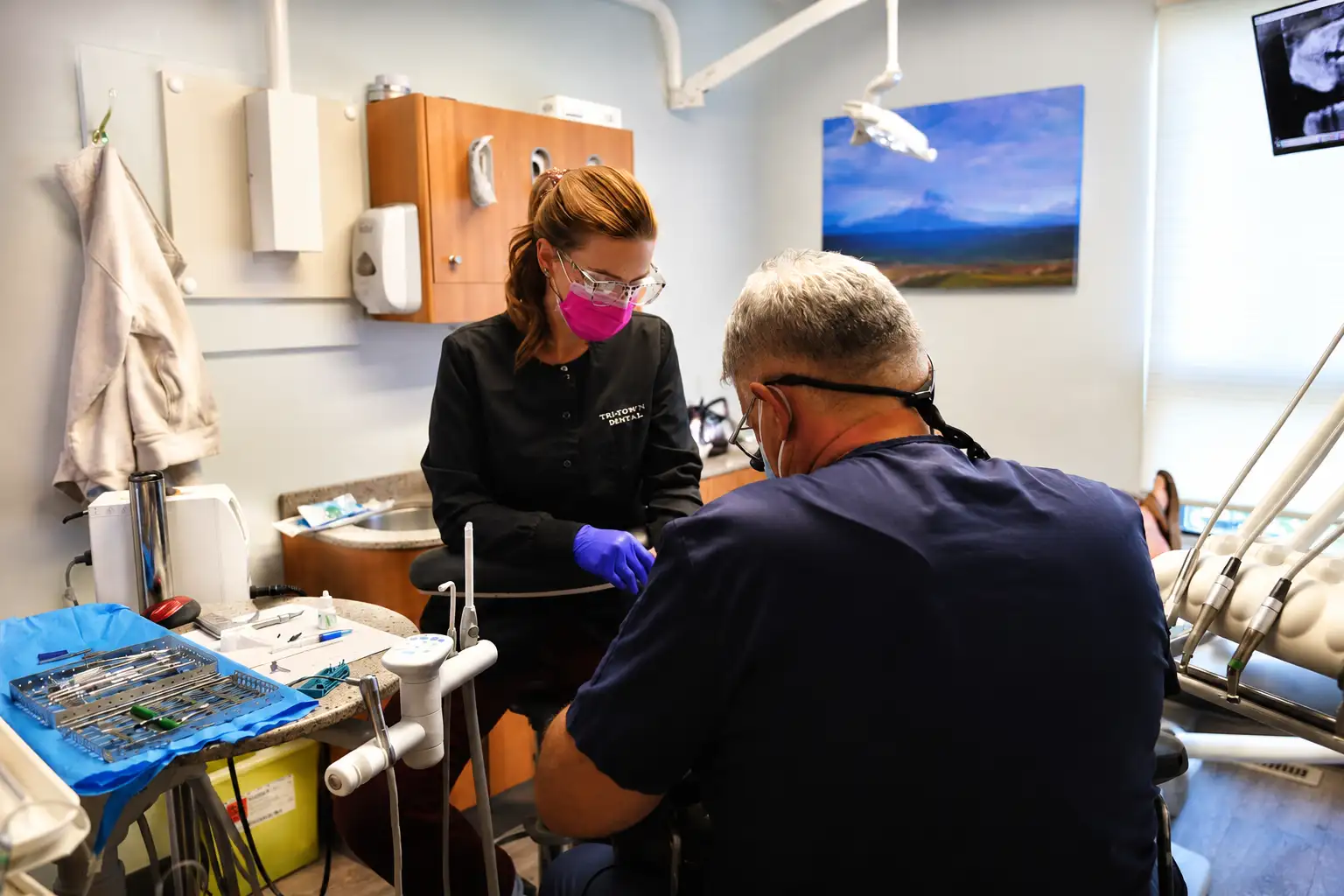
For patients in Cold Lake and the Lakeland region, travel can make dental care harder to plan. Oral surgery may involve time off work, transportation, family support, recovery time, and follow-up appointments.
When clinically appropriate, having more care available locally can make the process feel more manageable.
Our surgical dentistry services connect with several related areas of care, including wisdom teeth removal, tooth extractions, dental implants, bone grafting, IV sedation dentistry, restorative dentistry, and coverage or payment support.
We will be clear about what can be planned with us and when a referral may be recommended. Our goal is to help you understand your options and reduce unnecessary trips out of town when appropriate for your care.
Planning around work, family, recovery, and cost
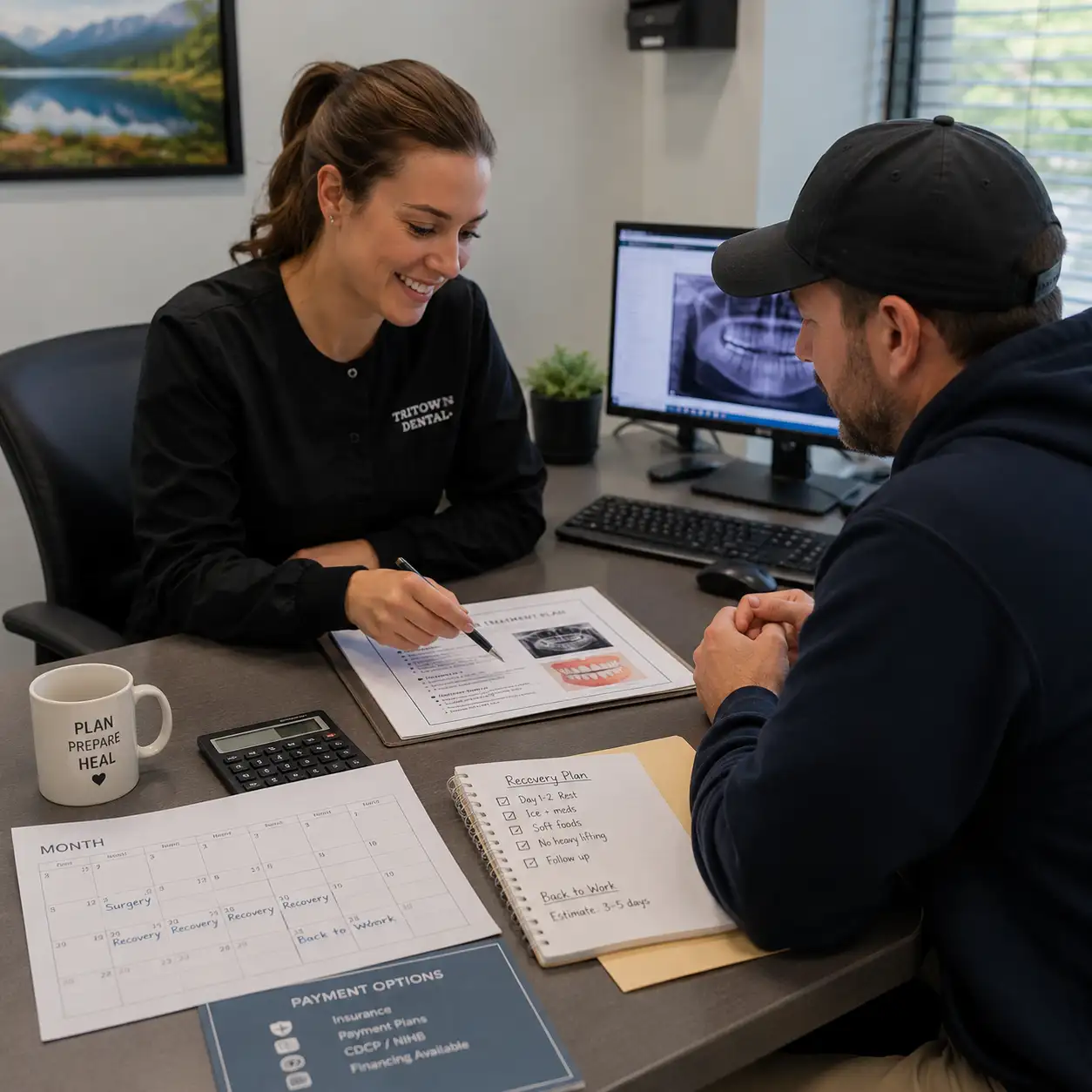
Oral surgery is not only a clinical decision. It is also a scheduling decision, a comfort decision, and often a financial decision.
Many patients in our region balance dental care with shift work, military postings, family responsibilities, school schedules, travel, and household budgets. Before moving forward, it is reasonable to ask questions about timing, recovery, estimates, coverage, payment options, CDCP, NIHB, and follow-up needs.
We help you understand what information may be needed and what questions to ask before treatment begins. We cannot guarantee coverage outcomes, but we can help make the planning process easier.
For some patients, care can be phased. For others, a specific concern may need to be addressed first. Either way, we explain the priority and the reasoning behind the recommendation.
What to expect at an oral surgery consultation
Your consultation is designed to move you from uncertainty to a clearer understanding of your options.
Conversation & Assessment
Your consultation begins with a conversation. We will ask what brought you in, what symptoms you are experiencing, what concerns you have, and whether anxiety, scheduling, cost, or travel are affecting your decision to seek care.
Exam & Imaging
Your assessment may include a dental exam, digital X-rays, gum evaluation, bite review, and additional imaging when appropriate. If sedation may be part of the conversation, we will also review relevant health information and discuss eligibility carefully.
Clear Options & Scheduling
After the assessment, we explain your options. This may include monitoring, extraction, wisdom teeth removal, implant-related surgery, bone grafting, sedation-supported surgical care, referral, or a phased plan. You will not be rushed into a decision.

Surgical dentistry for Cold Lake and the Lakeland region
We provide surgical dentistry support for patients in Cold Lake and across the Lakeland region, including nearby communities such as Bonnyville, St. Paul, Lac La Biche, and surrounding rural areas.
Patients choose us when they want practical guidance, clear explanations, and a dental team that understands the realities of living and working in northeast Alberta.
Whether you are dealing with discomfort now or planning treatment before it becomes urgent, we can help you start with a clear assessment.
- Wisdom Teeth Removal
- Tooth Extractions
- Dental Implants
- Bone Grafting
- Sedation-Supported Surgical Care
- Restorative Dentistry
- Coverage and Payment Support
- New Patient Care

Start with a calm conversation
If you are searching for oral surgery in Cold Lake, you may already be carrying stress about what comes next. You may be worried about pain, sedation, cost, recovery, travel, or how serious the concern has become.
You do not have to figure it out alone.
We will help you understand what is happening, what options may be available, and what comfort supports may be appropriate for your situation. From wisdom teeth and extractions to implant-related surgery and bone grafting, we focus on clear planning, steady communication, and practical next steps.
Your first step can be simple: ask questions, get assessed, and leave with a better understanding of what comes next.