- Dental Technology
Want Clearer Answers About Your Dental Care?
Explore dental technology in Cold Lake. We use modern tools to support diagnosis, treatment planning, patient communication, and more informed conversations about your oral health.
Technology that helps you understand your oral health
Many patients want to understand why treatment is being recommended before they agree to it. That is reasonable. A dental visit should not leave you guessing.
Modern dental tools can help us show you what is happening with your teeth, gums, bite, bone support, and existing dental work. They can also help us explain treatment options in a way that feels more visual and easier to follow.
Imaging and digital records may help us discuss tooth position, bone levels, jaw structures, decay, cracks, missing teeth, bite changes, gum concerns, and treatment planning needs. For patients who feel nervous or unsure, seeing more clearly can make the conversation feel less abstract.
Our goal is not to make your visit feel technical. Our goal is to make your care easier to understand.
Modern technology available in Cold Lake
We use dental technology to support clearer diagnosis, more organized treatment planning, and better conversations with our patients.
CBCT Imaging
Three-dimensional dental imaging that may help us see more detail than a traditional two-dimensional image in certain situations. CBCT imaging may support planning for dental implants, wisdom teeth assessment, bone grafting, surgical dentistry, and more.
Digital Scanning
Digital scanning may provide another way to capture detailed records of the teeth and bite without traditional impressions. It may support clear aligner planning, crowns, veneers, implant restorations, night guards, and snoring appliances.
AI-Supported Planning Tools
AI-supported planning tools help organize information, support communication, and assist with dentist-led treatment planning. The benefit is clarity — you can ask better questions and feel more involved in the planning process.
Laser Dentistry
Laser dentistry may be used in certain dental treatments involving soft tissue or other specific clinical needs. Depending on the situation, laser tools may support precision, workflow, and patient comfort.
In-House 3D Printing
In-house 3D printing can support dental workflow by helping create certain models, guides, appliances, or records depending on the treatment being planned. Digital scanning and 3D printing may work together for more organized care.

CBCT imaging in Cold Lake
CBCT imaging is a type of three-dimensional dental imaging that may help us see more detail than a traditional two-dimensional image in certain situations.
If you are asking about CBCT imaging in Cold Lake, you may be planning dental implants, wisdom teeth removal, bone grafting, surgical care, or another treatment that requires a more detailed view of the teeth, jawbone, nerves, sinuses, and surrounding structures.
CBCT imaging may support planning for:
- Dental implants
- Wisdom teeth assessment
- Bone grafting conversations
- Surgical dentistry
- Complex restorative care
- Jaw and bite-related assessment
CBCT imaging is not needed for every patient or every appointment. When we recommend it, we explain why it may be helpful, what we are looking for, and how it supports the larger treatment plan.
Digital scanning in Cold Lake
Traditional dental impressions can feel uncomfortable for some patients. Digital scanning may provide another way to capture detailed records of the teeth and bite in certain situations.
If you are searching for digital scanning in Cold Lake, you may be interested in clear aligners, crowns, veneers, implant restorations, night guards, snoring appliances, or other treatments that require accurate digital records.
Digital scanning may support:
- Clear aligner planning
- Crowns and restorative dentistry
- Veneers and cosmetic planning
- Night guards and snoring appliances
- Implant restorations
- Patient education and treatment communication
AI, laser, and 3D printing support
Additional tools that support diagnosis, planning, communication, and workflow.
AI-Supported Planning Tools
AI-supported planning tools can help organize information, support communication, and assist with dentist-led treatment planning. AI does not diagnose you on its own. It does not replace the dentist, clinical experience, or the conversation we have with you.
Laser Dentistry
Laser dentistry may be used in certain dental treatments involving soft tissue or other specific clinical needs. Depending on the situation, laser tools may support precision, workflow, and patient comfort. Laser dentistry is not used for every procedure.
In-House 3D Printing
In-house 3D printing can support dental workflow by helping create certain models, guides, appliances, or records depending on the treatment being planned. Like every technology we use, 3D printing supports the dental team — it does not replace assessment, diagnosis, or treatment planning.
Technology for more involved dental care
Dental technology can be especially helpful when treatment involves several decisions or connected steps.
For patients considering dental implants, technology may help us review bone support, tooth replacement options, and related planning needs.
For patients with wisdom teeth concerns, imaging may help us assess tooth position and surrounding structures.
For patients interested in clear aligners, digital scanning and records may help support treatment planning and communication.
For patients considering veneers, crowns, restorative dentistry, surgical dentistry, or advanced dental care, technology may help us explain what is happening now and what options may be available.
Modern tools support the conversation, but your care plan is still personal. We consider your oral health, comfort, goals, schedule, budget questions, and long-term function before recommending next steps.

Modern care close to home
Patients in Cold Lake and the Lakeland region often want access to modern dental care without unnecessary travel. When clinically appropriate, technology can help support more detailed planning locally.
This can matter for patients balancing shift work, military postings, family schedules, rural travel, and multiple responsibilities.
We will always be clear about what can be planned with us and when outside referral support may be recommended. Our goal is to help you understand your options, reduce avoidable uncertainty, and plan care with better information.
More care available locally. Fewer unnecessary trips out of town when clinically appropriate.

Dental technology supports better communication
One of the most important benefits of technology is communication.
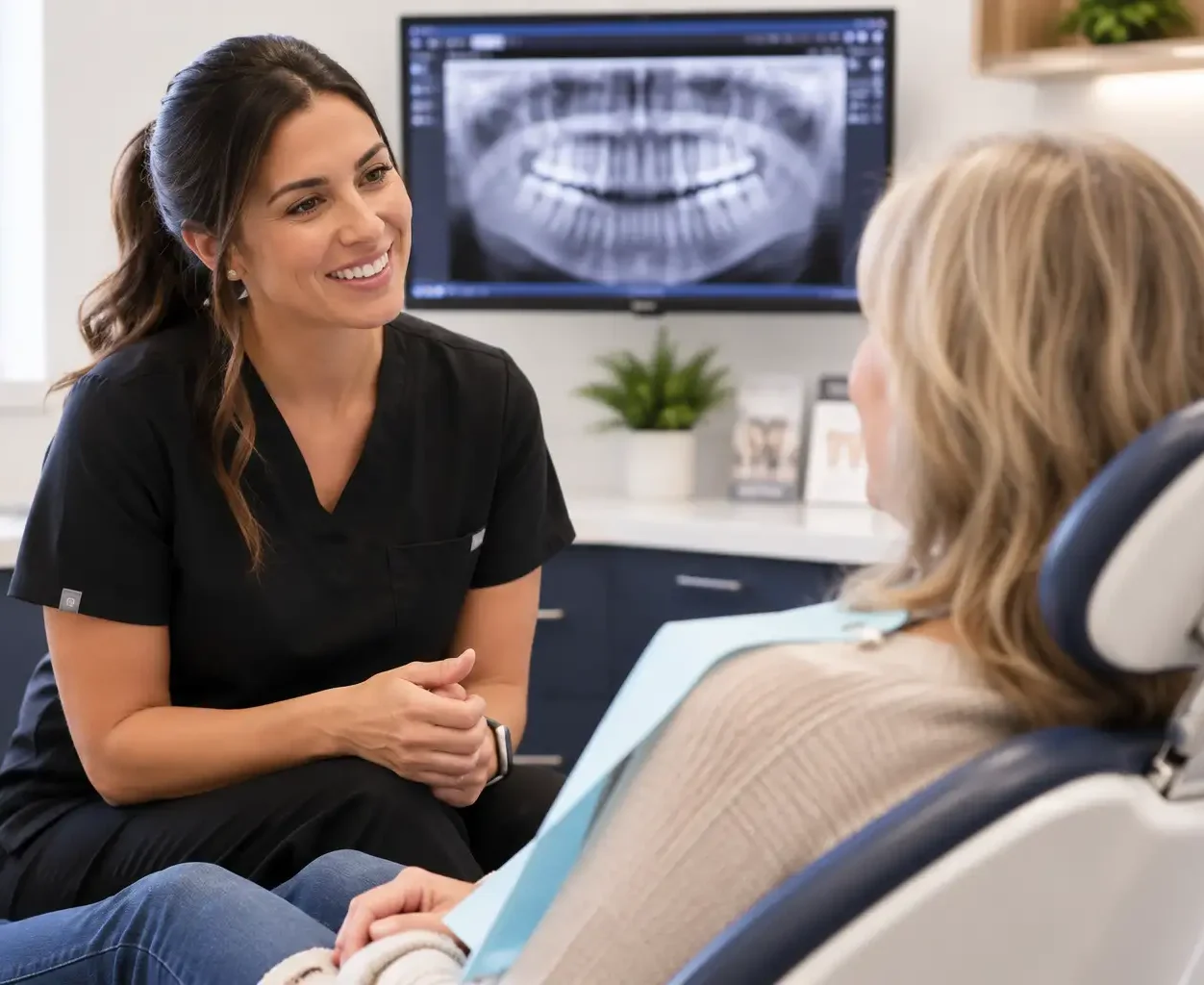
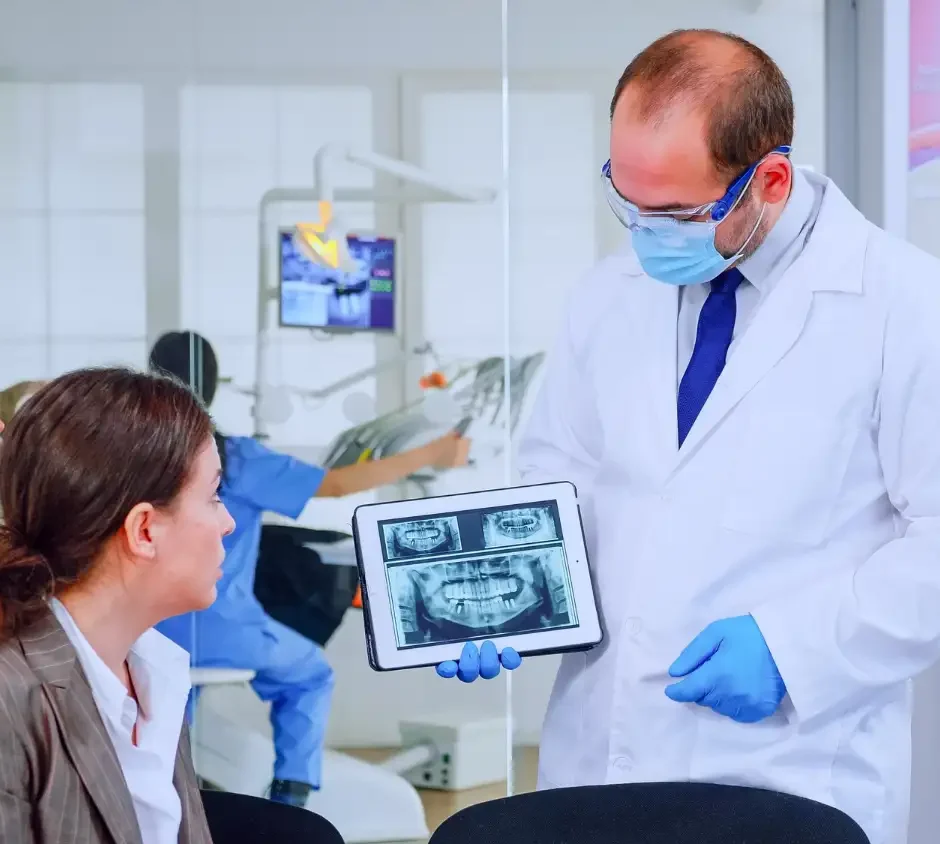
When you can see images, digital scans, or visual records, dental recommendations can feel easier to understand. You can see what we are discussing, ask questions, and make decisions with more confidence.
This matters for patients who feel nervous, have delayed care, or have received treatment recommendations in the past that were hard to understand. It also helps patients who are comparing options, planning phased care, or trying to decide what should happen next.
We want you to leave with a clearer picture of your oral health, not just a list of recommendations.
What to expect during a technology-supported visit
You do not need to understand the technology before your visit. We will walk you through what matters.
Conversation & Goals
Your visit starts with a conversation about what brought you in and what you want to understand. We ask about your symptoms, dental history, treatment goals, and any concerns you have about technology or the process itself.
Assessment & Imaging
Depending on your needs, we may recommend a dental exam, digital X-rays, CBCT imaging, digital scanning, photos, bite evaluation, or gum assessment. We explain what each tool is used for before moving forward.
Clear Options & Plan
After we gather the right information, we review the findings with you in plain language. We discuss preventive care, restorative treatment, dental implants, clear aligners, cosmetic options, or advanced care depending on your needs.
Technology with a human approach
Modern tools are valuable, but they are only one part of good dental care. Patients also need time, listening, explanation, and thoughtful next steps.
That is why our approach combines technology with patient-centered care. We ask what matters to you. We explain what we see. We discuss options clearly. We help you understand what may need attention now, what can be monitored, and what may be planned over time.
Technology helps us see more clearly. Our team helps you make sense of it.

Dental technology for Cold Lake and the Lakeland region
Our dental technology may support care involving:
Common questions about dental technology
We want you to feel informed before making any decisions about your care.
Dental technology includes modern tools such as CBCT imaging, digital scanning, AI-supported planning, laser dentistry, and 3D printing. These tools help us gather more detailed information, explain findings more clearly, and support more informed conversations about your oral health. Technology does not replace clinical judgment — it supports it.
CBCT (cone beam computed tomography) is a type of three-dimensional dental imaging. It may be used when planning dental implants, wisdom teeth removal, bone grafting, surgical dentistry, or other treatments that require a detailed view of teeth, jawbone, nerves, sinuses, and surrounding structures. CBCT is not needed for every patient or every appointment.
Digital scanning uses a small handheld device to capture detailed digital records of your teeth and bite. For some patients, this may feel more comfortable than traditional impression materials. Digital scans can help us plan clear aligners, crowns, veneers, implant restorations, night guards, and snoring appliances more accurately.
AI-supported planning tools help organize information, support communication, and assist with dentist-led treatment planning. They do not diagnose or replace the dentist. The benefit for patients is clarity — you can ask better questions, understand your options more easily, and feel more involved in the planning process.
No. Laser dentistry is used only in certain dental treatments involving soft tissue or other specific clinical needs. When it may be appropriate, we explain how it fits into the treatment plan and why it may be considered. Technology should make care more understandable, not more complicated.
In-house 3D printing can help create certain models, surgical guides, appliances, or records depending on the treatment being planned. Digital scanning and 3D printing may work together to support a more organized process. Like every technology we use, 3D printing supports the dental team — it does not replace clinical assessment.
Modern technology is an investment in better diagnosis, planning, and communication. We can discuss estimates, payment options, CDCP, NIHB, and coverage questions. We cannot guarantee coverage outcomes, but we can help you understand what information may be needed and what questions to ask your provider.
Yes. When clinically appropriate, we help patients access modern dental technology and care locally in Cold Lake. We serve the Lakeland region including Bonnyville, St. Paul, Lac La Biche, and surrounding areas. We will always be clear about what can be planned with us and when outside referral support may be recommended.
Start with a technology-supported consultation in Cold Lake
If you are searching for dental technology in Cold Lake, we can help you understand how modern tools may support diagnosis, planning, comfort, communication, and treatment confidence.
We serve patients across the Lakeland region, including families, shift workers, posted families, seniors, long-term local patients, and people who want modern dental care close to home.
Technology does not replace clinical judgment. It supports it. Our dentists remain responsible for diagnosis, recommendations, treatment planning, and care delivery.