
- Dental Services
Restorative Dentist in Cold Lake
We help you understand your options for repairing teeth, replacing teeth, and planning care around your comfort, goals, and budget.
Restorative dentistry starts with a clear picture
When a tooth is damaged, infected, worn, weakened, or missing, it is natural to wonder what comes next. Can the tooth be repaired? Does it need a crown? Would a bridge, denture, or implant make more sense? Is a root canal needed? Would bone grafting be part of the plan?
We start by listening. Maybe you want to chew more comfortably. Maybe you want to replace a missing tooth. Maybe a tooth keeps breaking. Maybe you have several concerns and feel unsure where to begin. We take time to understand what is bothering you, what matters to you, and what kind of outcome you are hoping for.
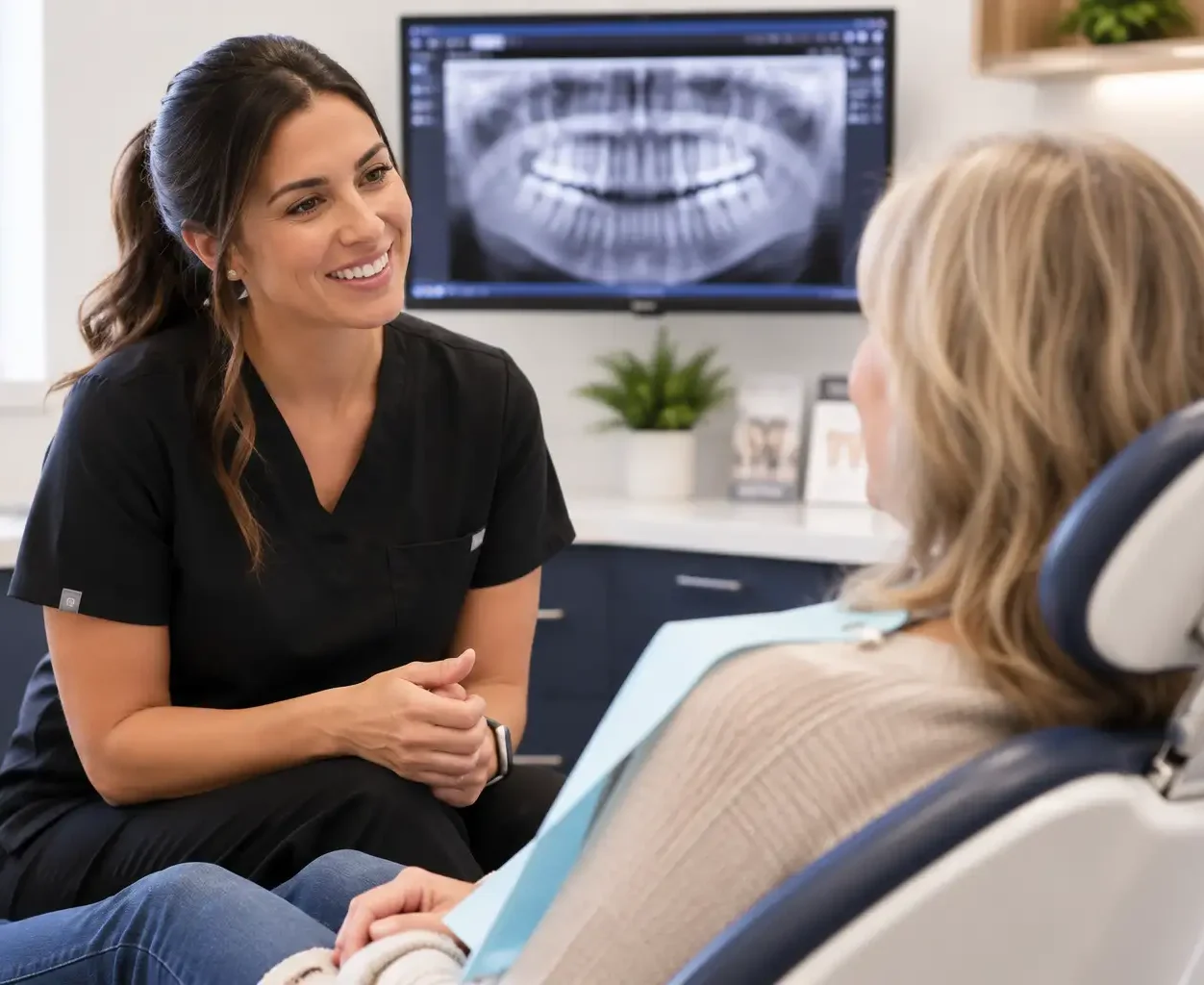
Your restorative visit may include an exam, digital X-rays, gum evaluation, bite review, and additional imaging when needed for implant or more complex treatment planning. Once we have the right information, we explain what we see in plain language.
Our approach is practical: identify the concern, explain your options, discuss priorities, and help you move forward with a plan that makes sense.
Repairing damaged, worn, or weakened teeth
Not every damaged tooth needs to be removed. In many cases, we focus on preserving and protecting as much natural tooth structure as possible.
Dental Fillings
Dental fillings are commonly used to repair cavities, small fractures, worn areas, or minor damage. A filling helps restore the tooth's shape and function while protecting the area from further decay. When decay or damage is found early enough, a filling may be a straightforward way to repair the tooth and reduce the chance of more involved care later.
Dental Crowns
A dental crown may be recommended when a tooth is cracked, heavily restored, worn down, weakened, or has had root canal therapy. A crown covers and protects the visible part of the tooth, helping restore strength, shape, and chewing function. Crowns are often considered when a filling alone may not provide enough protection.
Root Canal Therapy
Root canal therapy may be recommended when the inner tissue of a tooth becomes inflamed or infected. This can happen because of deep decay, a crack, trauma, or repeated dental work on the same tooth. The goal is to relieve discomfort and help preserve the natural tooth when possible. After root canal therapy, a crown may be recommended to protect the tooth over the long term.
Replacing missing teeth with the right option
Missing teeth can affect chewing, speech, jaw comfort, and the way nearby teeth function. There is no single tooth replacement option that fits every patient. We help you compare choices based on your oral health, bone support, goals, budget, and treatment timeline.
Dental Bridges
A dental bridge can replace one or more missing teeth by anchoring to nearby teeth or restorations. Bridges can help restore chewing function, reduce spaces in the smile, and support a more complete appearance. For some patients, a bridge may be a practical alternative to an implant, depending on the condition of the surrounding teeth and the overall treatment plan.
Dentures
Full or partial dentures provide removable replacement options for patients missing several or all teeth. Dentures can support appearance, speech, and everyday function. Some patients need traditional dentures. Others may be interested in implant-retained dentures for added stability. We can explain the differences and help you understand what may fit your situation.
Dental Implants
Dental implants are used to replace missing teeth with a stable foundation that can support crowns, bridges, or dentures depending on the patient's needs. We use consultation-based planning to review your oral health, imaging needs, bite, bone support, and treatment goals before discussing implant options. Dental implants are not the right fit for everyone, but they may be an important option for patients who want to replace missing teeth with a stable, long-term solution.
Bone Grafting and Implant Planning
Some patients need additional support before or during implant-related treatment. Bone grafting may be recommended when there is not enough bone volume or stability to support the planned implant. Bone grafting is not automatically needed for every implant patient. It depends on your anatomy, dental history, the location of the missing tooth, and your treatment goals.
If you are comparing dental implants and dentures in Cold Lake, we can walk you through what each option may involve and how they differ.
No judgment if you have waited
Many restorative patients have delayed care. That does not make them careless. It makes them human.
Dental anxiety, cost concerns, work schedules, family responsibilities, relocation, and past dental experiences can all make it harder to book an appointment.
By the time some patients call us, they may be dealing with broken teeth, missing teeth, infection, discomfort, or older dental work that no longer feels secure.
We do not believe in making patients feel embarrassed for needing care. We meet you where you are. We explain what we see. We help you understand what can be done now, what can be planned later, and what may need attention first.
A restorative consultation gives you a starting point. You can ask questions, understand your choices, and decide what feels right.
Clear planning for cost, coverage, and timing
Restorative dentistry can involve bigger decisions than routine care. That is especially true when treatment may include crowns, dentures, dental implants, bone grafting, or a phased plan.
We know patients want to understand cost, coverage, and timing before moving forward.
We can discuss estimates, coverage questions, CDCP, NIHB, payment options, and phased treatment planning where appropriate. We cannot guarantee coverage outcomes, but we can help you understand what information may be needed and what questions to ask.
Phased planning can be helpful when multiple teeth need attention. Instead of trying to do everything at once, we can help prioritize what matters first and what may be planned over time.
That kind of clarity can make restorative care feel more manageable and less overwhelming.

Restorative dentistry close to home
We provide restorative dental care for patients in Cold Lake and the Lakeland region, including nearby communities such as Bonnyville, St. Paul, Lac La Biche, and surrounding rural areas.
Many patients in our region balance dental care with work, family, military postings, shift schedules, and travel. When clinically appropriate, having more restorative options available locally can make care easier to access.
We focus on coordinated planning, clear explanations, and care that supports comfort, function, and confidence.
- Dental Fillings
- Dental Crowns
- Dental Bridges
- Dentures
- Root Canal Therapy
- Dental Implants
- Bone Grafting
- Coverage and Payment Support
What to expect at a restorative dental consultation
You will not be expected to make every decision immediately. Our goal is to help you leave with a clearer understanding.
Conversation & History
Your visit begins with a conversation about what is bothering you and what you would like to improve. We may ask about discomfort, chewing issues, missing teeth, older dental work, sensitivity, gum concerns, previous treatment, and your goals.
Exam & Imaging
Your assessment may include a dental exam, digital X-rays, gum evaluation, bite review, and additional imaging if needed for implant or more complex treatment planning. We gather the right information before discussing options.
Clear Options & Next Steps
After we gather the right information, we explain your options. We may discuss repair options, replacement options, timelines, treatment priorities, and whether related care may be part of the plan.

Start with options, not pressure
If you are searching for a restorative dentist in Cold Lake, you may already know something needs attention. What you may not know yet is which option makes the most sense.
That is where we can help.
Whether you need to repair a damaged tooth, replace missing teeth, compare dentures and implants, or plan care in phases, we will help you understand your options clearly.
You do not need to wait until the problem becomes urgent. You can start with a conversation, an exam, and a plan that helps you move forward with more confidence.