
- Sleep & Snoring Support
Snoring Affecting Sleep at Home?
Ask about a snoring mouth guard in Cold Lake. We help patients understand whether a custom dental appliance may support snoring, jaw comfort, and better sleep with a careful, health-aware approach.

Start with what is happening at home
Many patients ask about snoring support because sleep has become difficult for them or their partner. Snoring may be waking someone up at night. You may be waking with a dry mouth, jaw tension, morning headaches, or the feeling that your sleep was not restful.
You may have also tried an over-the-counter mouthpiece and found it bulky, uncomfortable, or hard to use consistently.
A sleep and snoring consultation gives us a clearer place to start. We will ask about your symptoms, sleep concerns, jaw comfort, clenching or grinding, dental history, and whether anyone has noticed pauses in breathing, choking sounds, or other sleep-related events.
Those details matter because not all snoring is the same. A dental appliance may be worth discussing for some patients, while others may need medical assessment before appliance planning moves forward.
You do not need to know which appliance you need before booking. That is what the consultation is for.
Sleep, snoring, and jaw support services
We help you understand the difference between snoring appliances, night guards, and other options so you can make a better-informed decision.
Snoring Mouth Guards
A snoring mouth guard is a custom dental appliance designed to support jaw position during sleep. For some patients, gently holding the lower jaw in a forward position may help support airflow. We assess your bite, teeth, jaw joints, and symptoms before discussing whether this option may be appropriate for you.
Mandibular Advancement Devices
A mandibular advancement device positions the lower jaw slightly forward during sleep. This may help support airflow by changing the position of the jaw and surrounding soft tissue. Before discussing this option, we review your oral health, tooth stability, gum health, bite relationship, and jaw comfort to determine suitability.
Custom Snore Guards vs Store-Bought
Store-bought snoring mouthpieces are not designed around your teeth, bite, jaw joints, or dental history. A custom snore guard begins with a dental assessment and may offer a more personalized fit with dentist-guided planning, adjustment, and follow-up when needed.
Night Guards for Grinding
A night guard for grinding and a snoring appliance are not the same thing. One protects teeth from clenching and grinding. The other supports jaw position and airflow. Some patients need one type, while others may need a different approach. We help you understand which option makes sense based on your symptoms.
Jaw Pain and Bite Support
Jaw tension, clenching, and grinding can overlap with snoring concerns. We assess your bite, jaw joints, tooth wear, and morning symptoms to determine whether jaw support, a night guard, or another appliance may help. A full assessment helps clarify the right next step.
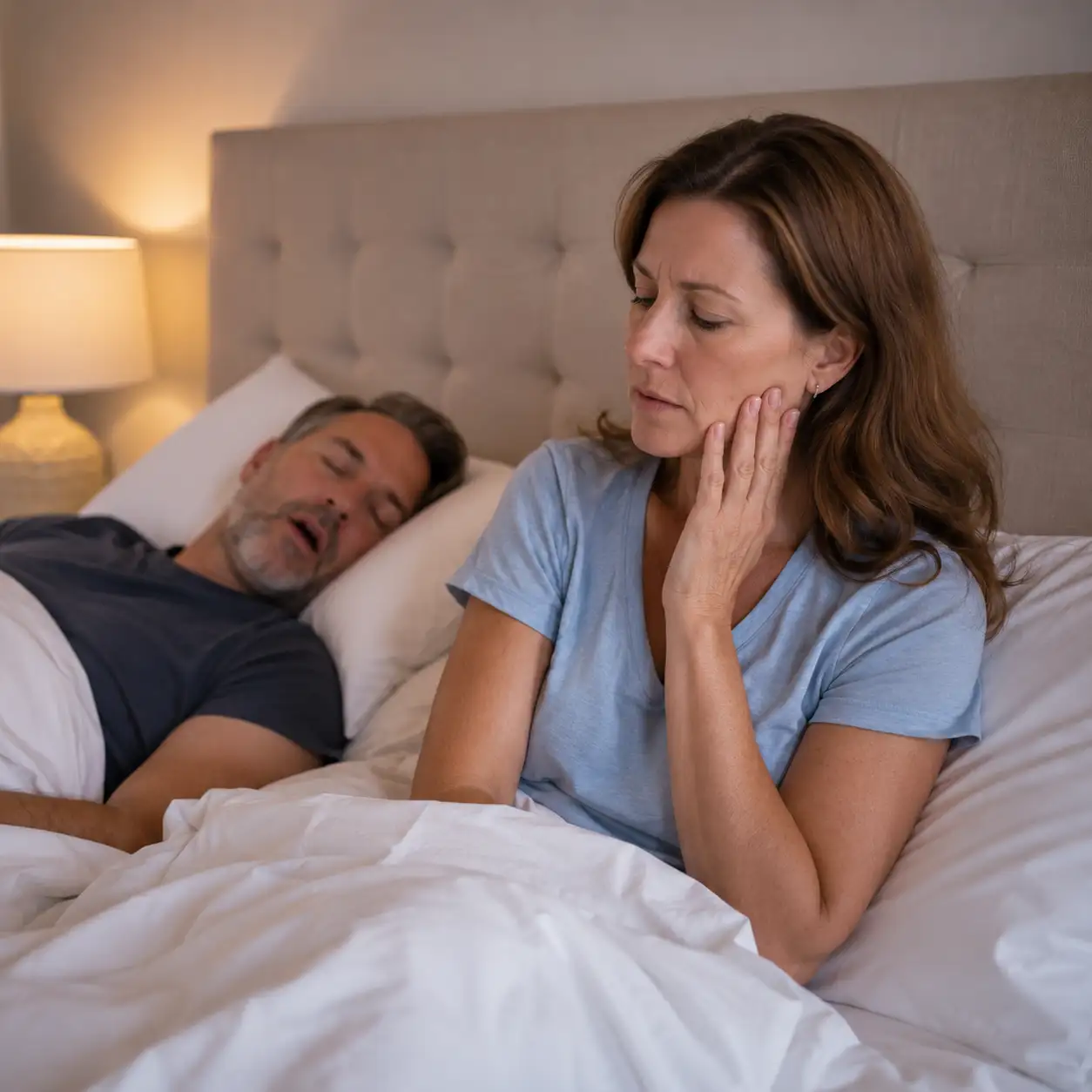
Snoring, jaw tension, clenching, and grinding can overlap
Some patients come in asking about snoring and discover they also have signs of clenching or grinding. Others ask about jaw discomfort and mention that their partner has noticed snoring. These concerns can overlap, but they are not always caused by the same thing.
It may be worth booking an assessment if you notice:
- Jaw soreness in the morning
- Worn, chipped, or sensitive teeth
- Morning headaches
- Clenching or grinding sounds at night
- Dry mouth when waking
- Partner-reported snoring
- Restless or interrupted sleep
A night guard and a snoring appliance are not the same thing. We can help you sort through the difference.
When snoring may need medical collaboration
Snoring can be a household frustration, but it can also overlap with broader sleep-health concerns. Loud snoring, witnessed pauses in breathing, gasping, choking sounds, excessive daytime tiredness, or morning headaches may be signs that medical assessment should be part of the conversation.
We do not diagnose sleep apnea from a dental visit alone, and a dental appliance is not a replacement for medical assessment when sleep-disordered breathing may be present.
What we can do is assess dental and jaw-related factors, talk through your symptoms, explain appliance options, and recommend medical collaboration when appropriate. This helps keep the process safer, clearer, and more complete.
Your health and safety come first, every time.
What to expect at a sleep and snoring consultation
Your consultation is designed to help you understand the dental side of snoring and sleep support.
Conversation & Symptoms
Your consultation starts with a conversation about what you are noticing. We will ask about snoring, sleep disruption, jaw tension, headaches, tooth wear, clenching, grinding, previous appliances, and whether you have had a sleep assessment before.
Dental & Jaw Assessment
Your assessment may include an exam, bite evaluation, review of tooth wear, gum health check, jaw joint discussion, and digital records when helpful. These details help us understand whether an appliance may be appropriate.
Clear Options & Next Steps
From there, we can explain whether a custom appliance may be worth considering, whether a night guard may be more appropriate, whether medical collaboration should happen first, or whether another next step makes more sense.
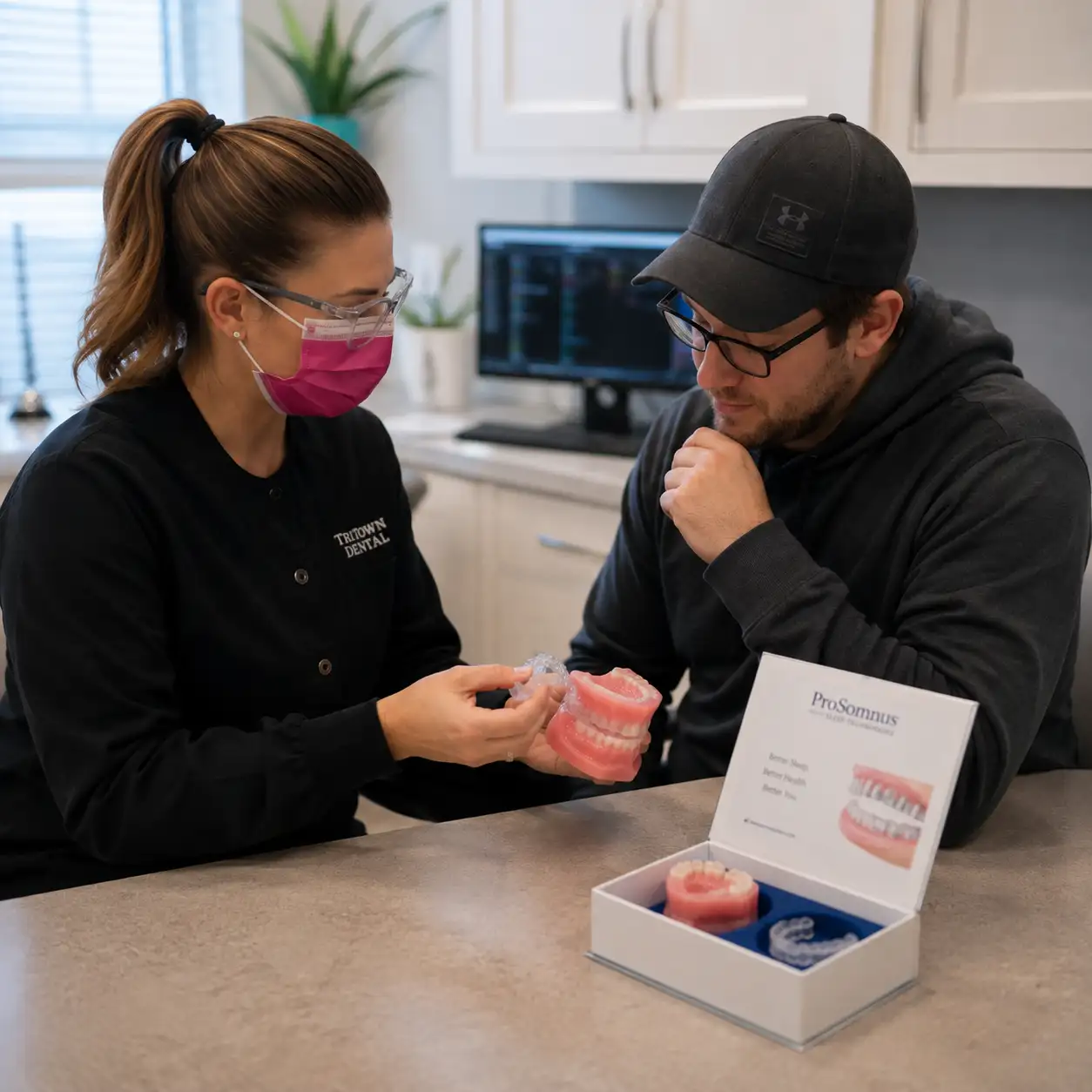
Planning around fit, comfort, cost, and follow-up
A dental appliance should fit your mouth, your bite, and your daily routine. That is why planning matters.
If a custom appliance is recommended, we can explain the process, expected timeline, fit considerations, adjustment needs, care instructions, and follow-up. We can also discuss estimates, payment questions, and whether coverage may apply depending on your plan and the type of appliance recommended.
We cannot guarantee coverage outcomes, but we can help you understand what information may be needed and what questions to ask before moving forward.
For patients who have already tried an over-the-counter device, we can discuss what did or did not work and whether a custom option may offer a better fit and experience.
Ask about custom appliance options.
Common questions about snoring and jaw support
We want you to feel informed before making any decisions about your sleep and jaw health.
A snoring mouth guard is a custom dental appliance that may help support jaw position during sleep. Some appliances are designed to gently hold the lower jaw in a more forward position, which may help support airflow for certain patients. It is not the same as a sports mouth guard or a night guard for grinding.
A mandibular advancement device is a type of dental appliance designed to position the lower jaw slightly forward during sleep. For some patients, this may help support airflow by changing the position of the jaw and surrounding soft tissue. It does not mean every patient who snores needs one, and an assessment is required first.
Store-bought snoring mouthpieces are not designed around your teeth, bite, jaw joints, or dental history. Many patients find them uncomfortable, difficult to keep in place, or hard to wear through the night. A custom snore guard begins with a dental assessment and is built to fit your mouth.
A dental appliance may help support airflow for some patients, but it does not stop snoring for everyone. Snoring can have multiple causes, and a dental appliance is only one possible option. We assess your symptoms, oral health, and whether medical factors may be involved before discussing expectations.
No. Snoring and sleep apnea are not the same thing. Loud snoring, witnessed pauses in breathing, gasping, choking sounds, excessive daytime tiredness, or morning headaches may be signs that medical assessment should be part of the conversation. We do not diagnose sleep apnea from a dental visit alone.
Common signs include jaw soreness in the morning, worn, chipped, or sensitive teeth, morning headaches, clenching or grinding sounds at night, dry mouth when waking, and restless or interrupted sleep. A night guard and a snoring appliance are not the same thing, so the right assessment matters.
If you notice loud snoring, witnessed pauses in breathing, gasping, choking sounds, excessive daytime tiredness, or severe morning headaches, medical assessment may be needed first. A dental appliance is not a replacement for medical assessment when sleep-disordered breathing may be present.
Coverage depends on your plan, eligibility, and the type of appliance recommended. We cannot guarantee coverage outcomes, but we can help you understand what information may be needed and what questions to ask your provider before moving forward.

Sleep, snoring, and jaw support close to home
We provide sleep, snoring, and jaw support for patients in Cold Lake and the Lakeland region, including nearby communities such as Bonnyville, St. Paul, Lac La Biche, and surrounding rural areas.
For many patients, local care makes it easier to ask questions, complete an assessment, plan an appliance when appropriate, and return for follow-up if adjustments are needed.
Our sleep, snoring, and jaw support may connect with:
- Snoring Mouth Guards
- Custom Snore Guards
- Mandibular Advancement Devices
- Night Guards for Grinding
- Jaw Pain and Bite Support
- Sleep Appliance Consultations
- New Patient Care
- Coverage and Payment Support

Start with a sleep and snoring consultation in Cold Lake
If snoring is affecting sleep at home, it can feel frustrating and personal. You may feel embarrassed, tired, or unsure whether a dentist is the right place to start.
We can help you understand the dental side of the concern.
Whether you are asking about a snoring mouth guard in Cold Lake, a snore guard, a mandibular advancement device, jaw tension, clenching, grinding, or appliance options, we will help you begin with clear information and practical next steps.
You do not need to know which appliance you need before booking. That is what the consultation is for.