
If you have been told you may need a bone graft before a dental implant, we can help you understand why, whether it may be necessary, and how it could affect your treatment plan.
hearing that you may also need
bone grafting can raise a new set of questions.
Why do you need it? Is it always necessary? Will it add months to treatment? What will it cost? And does it mean another surgery?
At Tri-Town Dental in Cold Lake, we start by answering those questions.
A bone graft for an implant may be recommended when the area does not have enough suitable bone to support the planned implant treatment. But bone grafting is not automatically required for every patient.
We assess your oral health, available bone, anatomy, treatment goals, and the location being restored before recommending a path forward. Then we explain what we see and what your options may be so you can make an informed decision.
Dental implants rely on bone for support. When a tooth has been missing for some time, the surrounding bone can change in shape or volume. Bone can also be affected by previous infection, gum disease, trauma, extraction, or individual anatomy.
That does not mean every missing tooth requires grafting.
If there is already enough suitable bone for the proposed implant, a graft may not be necessary. When additional support is needed, bone grafting for dental implants may help prepare or preserve the area for future implant treatment.
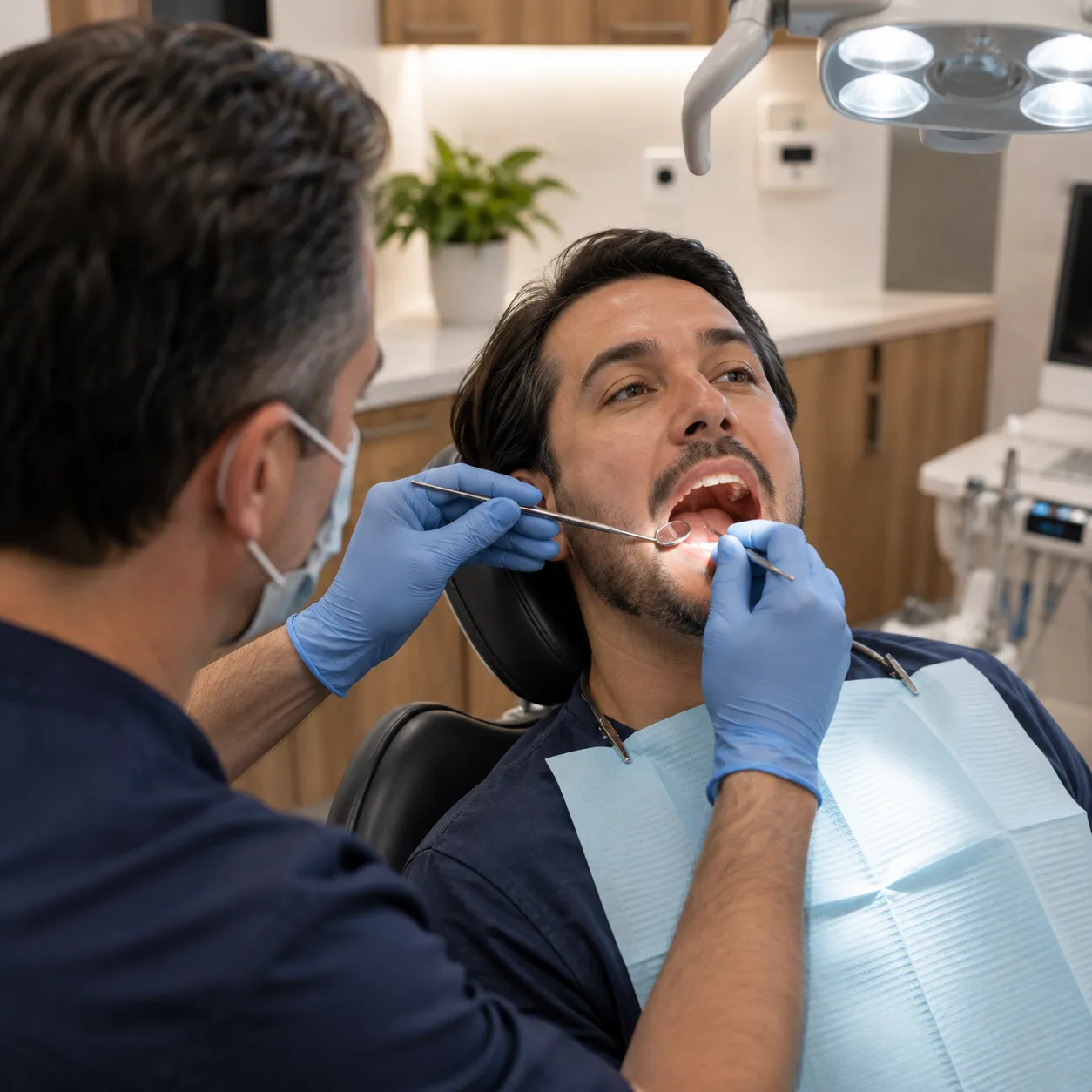
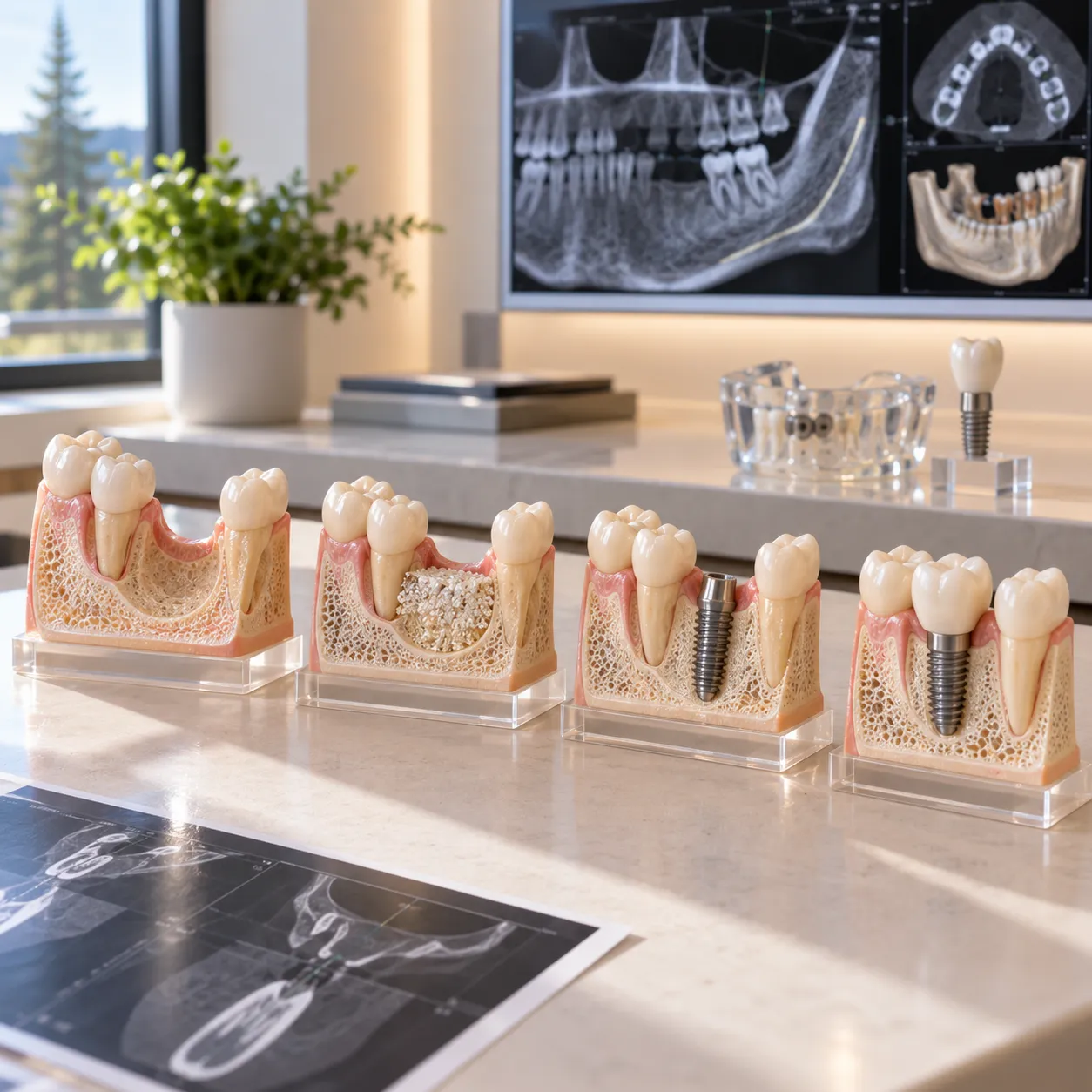
We begin with a clinical assessment and appropriate dental imaging. For implant-related planning, we may use CBCT 3D imaging to evaluate the area in three dimensions. This can help us assess available bone and understand nearby anatomical structures that may influence treatment.
We may also consider:
Technology helps us gather information and plan more clearly, but our recommendations remain dentist-led and specific to your individual needs.
The details of bone grafting vary depending on the area being treated and how much support may be required.
In general, grafting involves placing bone-graft material in an area where additional bone support is desired. The area is then given time to heal and integrate as part of the treatment process.
Some grafting procedures are relatively limited. Others may involve more extensive treatment.
In certain cases, grafting may be completed at the same time as another procedure. In other cases, healing may need to occur before implant placement is considered.
We explain the proposed sequence before treatment so you understand what is being recommended and why.
Sometimes it can add healing time to an implant plan.
The amount of time depends on your anatomy, the extent of grafting, the area being treated, and how healing progresses. There is no single timeline that applies to every patient.
For some patients, a graft needs time to heal before we consider implant placement. For others, grafting and implant-related care may be coordinated differently when clinically appropriate.
The cost of dental implants and bone grafts depends on what your individual treatment requires.
The type and extent of grafting, diagnostic imaging, implant treatment, restorative care, and other clinical needs can all affect the overall cost.
We do not believe an implant patient should have to move forward without understanding the financial side of treatment.
Before treatment begins, we can review the proposed care, provide estimates, discuss potential preauthorization requirements, and help you understand what your dental coverage may or may not contribute.
We work with CDCP, NIHB, and many major dental insurance plans. Eligible patients may also have payment options available.
Coverage and approval vary between plans and procedures, so we do not guarantee what an insurer or program will pay. Our role is to help make the available information as clear as possible before you decide how to proceed.
It is normal to have questions about discomfort, swelling, time away from work, and what you will be able to do after treatment.
Recovery depends on the type and extent of the procedure. We provide post-treatment instructions based on your individual care and explain what to watch for during healing.
The early recovery period and the deeper biological healing process are not necessarily the same thing. Even after you are feeling more comfortable, the grafted area may continue healing before the next stage of treatment is appropriate.
We monitor that process through follow-up and reassessment.
You can tell us.
Many patients considering implant or surgical treatment have concerns about discomfort, needles, previous dental experiences, or simply not knowing what to expect.
We take those concerns seriously.
Our approach is to explain treatment in plain language, answer questions without judgment, and help you understand what comfort options may be available.
For eligible patients and appropriate procedures, we may also discuss IV sedation dentistry. Sedation is not automatically recommended for every bone graft or every patient. We review your health history and treatment needs before determining whether it may be an appropriate option.
A bone graft is usually not the end goal.
For many patients, it is one possible step toward replacing a missing tooth with a dental implant.
When grafting is appropriate, the larger treatment pathway may include assessment, imaging, grafting, healing, implant placement, and the final restoration. Your sequence may be different depending on your needs.
Because we provide implant-related assessment, surgical care, restorative dentistry, CBCT imaging, digital scanning, and sedation discussions in Cold Lake, we can coordinate many parts of treatment within one care plan.
Some situations still require referral. If we believe another provider should be involved in your care, we will explain why and help you understand the next step.
Our goal is not to keep every procedure in-house at all costs. Our goal is to recommend the path that makes sense for you.
We welcome patients from Cold Lake and surrounding Lakeland communities, including people travelling from Bonnyville, St. Paul, Lac La Biche, and rural northeast Alberta.
For patients who are already balancing work, family, travel, or a military posting, having more implant-related planning available close to home can make treatment easier to organize. We combine modern diagnostic technology with a conservative approach to treatment planning.
We want you to understand:
what we see, why we are recommending treatment, what your alternatives may be, what can wait, what may need attention sooner, and what the overall plan could mean for your time and budget.
You do not need to decide whether you need a bone graft before you arrive. That is what the assessment is designed to determine.
No. Some patients have enough suitable bone for implant treatment without grafting. We assess the proposed implant area before determining whether additional bone support may be recommended.
Sometimes. Whether grafting can be coordinated with implant placement depends on the condition of the site, the amount of bone present, and the treatment being planned. Other patients may need the graft to heal first.
We use a clinical examination and appropriate imaging to evaluate the proposed implant site. CBCT 3D imaging may be used when it can provide helpful information about bone and surrounding anatomy.
Healing time varies. The type of graft, size of the area, individual health factors, and treatment plan can all influence how long we wait before considering the next stage.
Coverage depends on your specific dental plan or program and the treatment being proposed. We can help review estimates, possible preauthorization requirements, and expected out-of-pocket costs before treatment begins.
Yes. If anxiety or surgical treatment is a concern, we can discuss available comfort options. IV sedation may be available for eligible patients when clinically appropriate.
If you are considering dental implants, have already been told that grafting may be necessary, or want a clearer explanation of your options, we can help.
We will assess your oral health and available bone, explain what we see, and discuss how bone grafting and dental implants may fit into your treatment plan.