
Medication Administration
Medication is administered through an IV.
We listen without judgment, review your health and treatment needs, and explain whether IV sedation may help make dental care more manageable.
We take those concerns seriously.
You may have postponed appointments because of a previous experience, fear of needles, a strong gag reflex, sensitivity to dental sounds or sensations, or concern about losing control. You may also be preparing for wisdom teeth removal, dental implants, bone grafting, extractions, or another procedure that feels difficult to face.
When you visit us looking for an IV sedation dentist in Cold Lake, we begin with a conversation. We want to understand what makes treatment difficult, what care you may need, and what would help you feel more prepared.
IV sedation may be an option for suitable patients, but we do not recommend it automatically. We first review your medical history, medications, anxiety, treatment needs, and recovery arrangements.
Our goal is to help you understand your options and make an informed decision without judgment or pressure.
Feeling nervous before a dental appointment is common. For some people, however, anxiety becomes strong enough to delay or prevent care.
You may:
We do not minimize these experiences or expect you to “just relax.”
We begin by asking what has been difficult in the past and what concerns you about the treatment being considered. That conversation helps us determine whether IV sedation, another comfort approach, or a carefully paced appointment may be appropriate.
IV sedation involves administering medication through an intravenous line to help suitable patients feel deeply relaxed during dental treatment.
It is generally a form of conscious sedation rather than general anesthesia. You are not necessarily fully unconscious, although your awareness and memory of the appointment may be reduced.
Individual experiences vary.
We explain the intended level of sedation before your appointment. We do not promise that every patient will sleep, remember nothing, or experience sedation in exactly the same way.
Clear expectations are an important part of informed care.Medication is administered through an IV.
We manage the sedation level throughout treatment.
We monitor you during the appointment.
We may still use local anesthetic in the treatment area.
You may feel drowsy and deeply relaxed.
Your awareness and memory may be limited.

IV sedation may be considered when anxiety or another barrier makes dental care difficult to tolerate conventionally. We may discuss it when you:
IV sedation is not suitable for every person or procedure.
We review the complete situation before making a recommendation. When another comfort option may be more appropriate, we explain why.
Book a consultation so we can review your health, medications, anxiety, and proposed treatment before discussing sedation options.
Sedation begins with a detailed medical assessment. Before recommending IV sedation, we may review:
Certain health conditions, medications, or personal circumstances may affect whether sedation is appropriate. We may request additional information, recommend another approach, or coordinate with another healthcare professional when needed.
We will explain our reasoning clearly.
Screening is not intended to create another obstacle. It helps us plan care responsibly and determine which option may be safest and most appropriate for you.
Preparation instructions depend on your health, treatment, and sedation plan.
We provide instructions before your appointment so you know what to do. These may cover:
We explain these responsibilities in advance so you can arrange transportation, time away from work, childcare, or other support before your appointment.
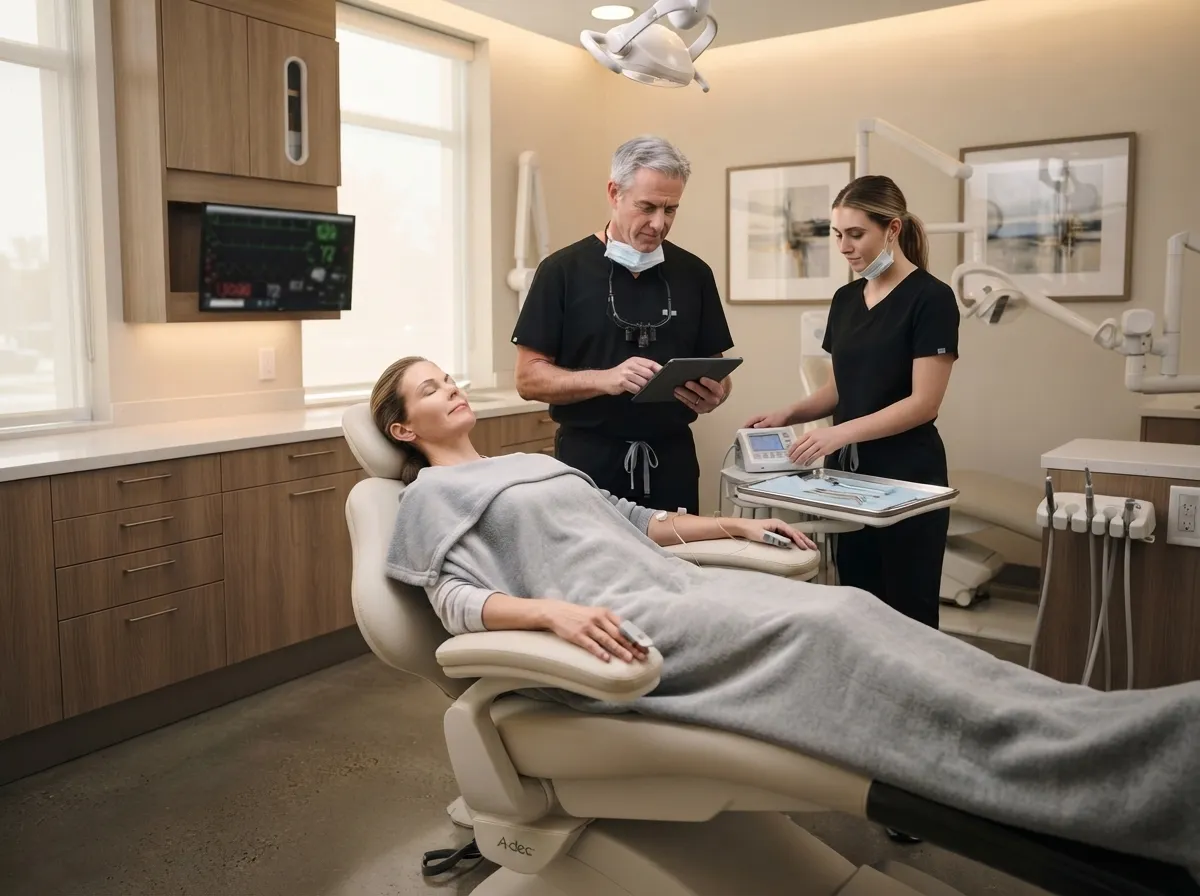
Patients often ask how we support them while they are sedated.
We monitor you throughout the appointment and adjust our approach according to the treatment plan and your response.
Our decisions remain patient-specific. We continue to evaluate your condition, comfort, and level of sedation while care is underway.
If something changes or the planned approach is no longer appropriate, we reassess rather than forcing the original plan.
You remain entitled to clear information, informed consent, and respectful care at every stage.
Sedation dentistry may be considered for several types of treatment when medically and clinically appropriate.
We may discuss IV sedation in connection with:
IV sedation does not mean every procedure can automatically be completed in one appointment.
The amount of treatment we can responsibly coordinate depends on your health, the procedures involved, appointment length, and the overall care plan. We explain the expected number of visits and which stages may be combined before treatment begins.
Call (780) 594-5056 to discuss whether IV sedation may be appropriate for your planned dental care.
IV sedation is one possible comfort option, but it is not the only way we support anxious patients.
Your care may also include:
Some patients may benefit from another form of sedation or a carefully structured appointment without IV medication.
We do not use sedation as a substitute for listening.
We want to understand your concerns and create a plan that reflects both your treatment needs and your comfort.
Searching for IV sedation dentistry near me is often about more than convenience.
A sedation appointment can involve an escort, transportation, recovery planning, time away from work, childcare, and follow-up. Travelling long distances can make those arrangements more complicated.
We provide IV sedation assessment and a broad range of related dental care in Cold Lake. When clinically appropriate, this can help you coordinate more of your treatment closer to home.
We welcome patients from:
Some situations may still require collaboration with or referral to another healthcare professional. When that is appropriate, we explain the reason and help you understand what comes next.
Our goal is to make more care available locally while keeping every recommendation careful and specific to your needs.
The cost of IV sedation can vary according to the length of the appointment, the treatment involved, monitoring requirements, and the complete care plan.
An assessment is generally required before we can prepare an accurate estimate.
Once we understand your needs, we can discuss:
Dental benefit plans do not always cover sedation. Coverage and reimbursement depend on the rules of your plan.
We can help you review the information available, but we cannot guarantee eligibility, approval, or reimbursement.
When appropriate, we can also discuss phased treatment or available payment arrangements.

Many patients seeking sedation are also worried about the condition of their teeth or how long they have avoided treatment.We focus on what you need now.
We will not shame you for anxiety, cancelled appointments, or time away from dental care. We assess your current oral health, explain what we see, and help you understand which concerns may need attention first.
When several treatments are recommended, we can discuss priorities, timing, comfort, and costs. You do not need to agree to everything before you understand the options. We provide guidance and clear information. The final decision remains yours.
You do not need to decide on IV sedation before contacting us.
Start by telling us what makes dental care difficult and what treatment you may need. We will review your concerns, assess medical suitability, and explain the comfort options that may be available.
No judgment. Clear options. Modern care. Advanced care close to home.