Which Type of Denture Is Right for You?

We help patients looking for dentures in Cold Lake compare full dentures, partial dentures, and other tooth-replacement options based on comfort, function, appearance, oral health, and budget.

Missing several or all of your teeth can

affect everyday life in ways that are easy to
underestimate.

Eating certain foods may become more difficult. Speech can feel different. You may find yourself thinking about your teeth when you smile, meet people, or sit down for a meal.

If you are considering dentures in Cold Lake, the first question is not simply whether dentures are available. It is which type of tooth replacement makes sense for you.

We start by understanding what you want to improve. We assess your remaining teeth, gums, bite, and overall oral health, then help you compare the options available.

You do not need to decide what kind of denture you want before you arrive.

Full Dentures or Partial Dentures: What Is the Difference?

The right denture depends largely on how many teeth are missing and the condition of the teeth that remain.

Full Dentures

Full dentures replace all of the teeth in the upper arch, lower arch, or both.

We may discuss complete dentures when all of the teeth in an arch are already missing or when remaining teeth cannot reasonably be maintained.

Before recommending treatment, we assess your gums, jaw, bite, and any remaining teeth. If other dental care is needed before a denture can be planned, we explain how those steps fit together.

Partial Dentures

Partial dentures replace several missing teeth while allowing healthy natural teeth to remain.

A partial denture can help fill gaps and support chewing, speech, and appearance. Its design depends on the location of the missing teeth and the health and position of the teeth that remain.

We look at the whole mouth rather than simply filling an empty space.

Other Tooth-Replacement Options

Dentures are not your only option.

Depending on your oral health and the number of missing teeth, we may also discuss dental bridges, dental implants, or implant-retained dentures.

We do not assume that dentures are automatically the right treatment because that is what you searched for. We help you compare the realistic options before you choose.

Compare Your Tooth-Replacement Options
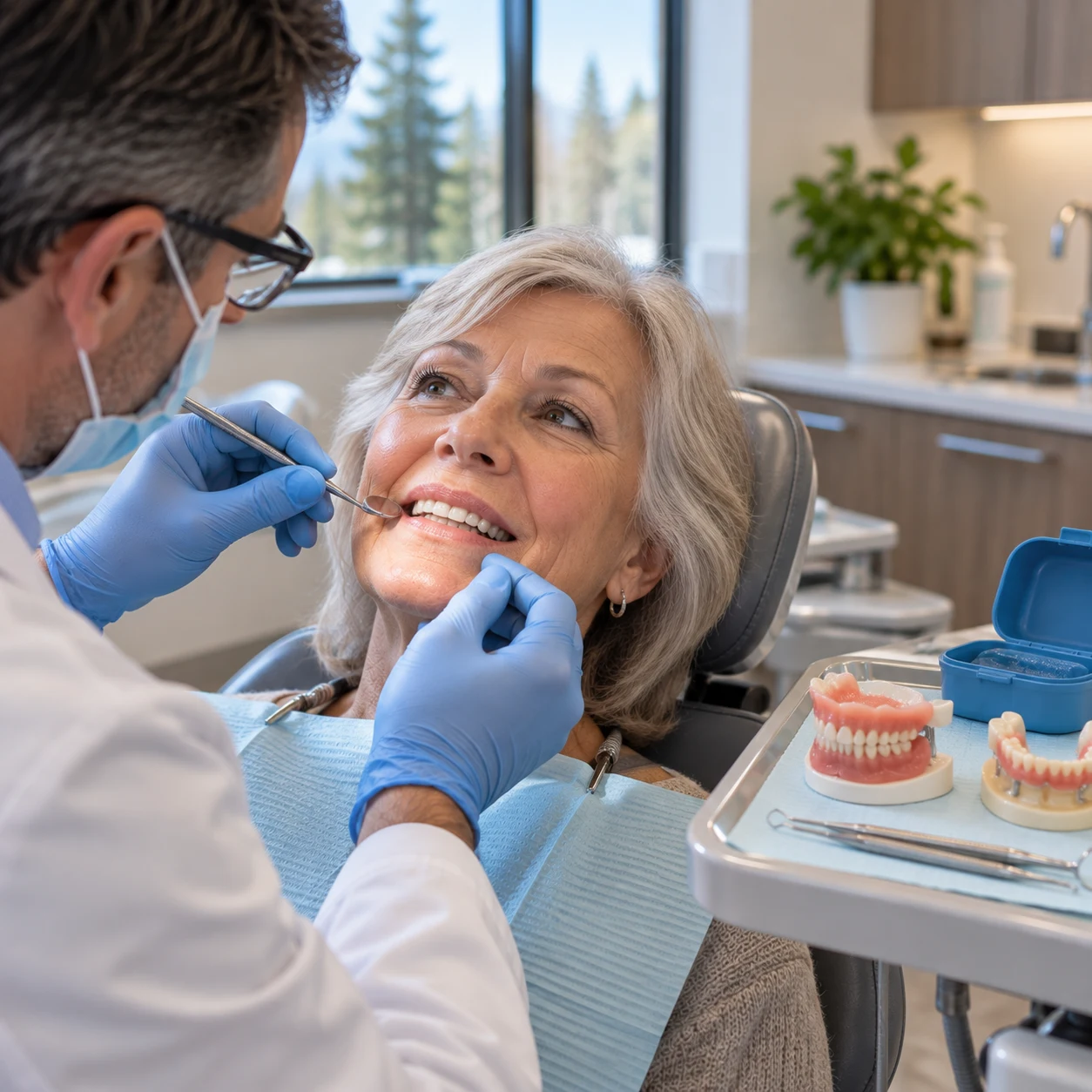
Dental professional carefully checking the fit and bite of a denture during a follow-up appointment.

Will Your Dentures Feel Comfortable?

Fit is one of the most common concerns we hear.

A denture needs to work with the shape of your mouth, your bite, your gums, and any remaining teeth. Even with careful planning, however, a new denture can feel unfamiliar at first.

Eating, speaking, and moving your tongue may feel different during the adjustment period.

We set realistic expectations from the beginning rather than suggesting dentures will immediately feel exactly like natural teeth.

Follow-up is also important.

Your gums and jaw can change over time, so a denture that once fit comfortably may eventually begin to feel loose or less stable. If that happens, we can assess what has changed and discuss the appropriate next step.

Can Dentures Help You Eat and Speak More Comfortably?

Replacing missing teeth can support everyday chewing and speech, but adjusting to dentures usually takes practice.

We plan treatment with fit, bite, tooth position, speech, and function in mind. Our goal is to give you a tooth-replacement option that works for everyday life, not simply fills visible gaps.

You may need time to learn how different foods feel and how your speech responds to the new appliance.

If stability is an important concern, we can also discuss whether an implant-retained denture may be worth considering.

Implant-related treatment is not suitable for every patient, and we do not present it as automatically better than a conventional denture. We explain the differences in treatment, stability, maintenance, timing, and cost so you can decide what matters most to you.

Will Your Dentures Look Natural?

Appearance matters.

You may want your replacement teeth to feel appropriate for your face, smile, and everyday appearance without looking obvious or out of place.

We consider appearance alongside function.

We also talk with you about what you want from treatment. For many patients, the goal is not an entirely different smile. It is feeling more comfortable speaking, eating with other people, smiling in photographs, and going about daily life without constantly thinking about missing teeth.

What If Your Current Dentures No Longer Fit Well?

Dentures and the mouth supporting them can change over time.

If you already wear dentures, it may be worth having them assessed when you notice changes such as:

  • movement while eating or speaking
  • sore or irritated areas
  • increasing looseness
  • clicking or shifting
  • difficulty chewing
  • visible wear
  • a noticeable change in fit

These symptoms do not automatically mean you need new dentures.

We first assess your mouth and the existing appliance to understand what is causing the problem. We can then discuss whether adjustment, further care, replacement, or another treatment option may make sense.

Dentures, Bridges, or Dental Implants?

There is no single tooth-replacement option that is right for everyone.

A removable denture may fit one patient’s needs well, while another may prefer to consider a bridge or dental implants.

When we compare options, we look at factors such as the number of missing teeth, the condition of your remaining teeth, gum and bone health, whether you prefer removable or fixed treatment, treatment time, maintenance, and cost.

We also consider what matters most to you.

Some patients prioritize affordability. Others care most about stability or avoiding removable treatment. Some want a practical solution with fewer treatment stages.

We help you understand those trade-offs before you commit.

Our goal is not to push you toward the most complex option. It is to help you choose an option that makes sense for your mouth and your life.

What Do Dentures Cost in Cold Lake?

The cost of dentures in Cold Lake depends on the type of treatment you need.

Full and partial dentures involve different planning. Your overall cost can also be affected by the condition of your remaining teeth, whether other treatment is required first, and whether you are considering implant-related options.

We prefer to give you an estimate based on your actual treatment plan rather than an advertised price that may not reflect your needs.

After we assess your mouth, we can review the proposed treatment and expected costs with you.

We can also discuss dental insurance, CDCP, NIHB for eligible patients, possible preauthorization requirements, expected out-of-pocket costs, and payment options that may be available.

Coverage varies between plans and programs, so we cannot guarantee what will be paid.

We can, however, help you understand the available financial information before you decide how to proceed.
What Should You Expect After Getting Dentures?

Getting dentures is not simply a matter of receiving an appliance and being finished.

Your mouth may need time to adapt to the way your dentures feel when speaking and chewing. We provide guidance for wearing and caring for them and can arrange follow-up when adjustments are needed.

Ongoing oral care remains important as well.

If you still have natural teeth, regular preventive care helps protect them. Even if you have no natural teeth in an arch, your gums and other oral tissues still need attention.

We also recommend having dentures assessed if their fit or comfort changes.

You do not need to simply tolerate dentures that have become uncomfortable.

Older couple arriving at a Cold Lake dental clinic from the surrounding Lakeland region for denture care.

Dentures in Cold Lake and the Lakeland Region

We welcome patients looking for dentures in Cold Lake and patients travelling from surrounding Lakeland communities, including Bonnyville, St. Paul, Lac La Biche, and rural northeast Alberta.

Whether you are replacing missing teeth for the first time or have worn dentures for years, we begin by asking what you want to improve.

Is eating your biggest concern? Are your current dentures moving? Do you want to improve your appearance? Is cost the deciding factor? Would you like to know whether a more stable option is available?

We use those answers alongside our clinical assessment to build a treatment plan around your needs.

Frequently Asked Questions About Dentures

How do we determine which type of denture you need?

We assess how many teeth are missing, the condition of your remaining teeth and gums, your bite, and what you want from treatment. We can then discuss whether a full denture, partial denture, or another tooth-replacement option may be appropriate.

Are dentures supposed to feel loose?

A new denture can feel unfamiliar while you adjust, but ongoing movement, soreness, or difficulty chewing should be assessed. Changes in your gums and jaw over time can affect fit.

Can dentures help you chew more comfortably?

Replacing missing teeth can support chewing, although dentures do not function exactly like natural teeth. We plan around fit and bite and provide follow-up as you adapt.

How long does it take to adjust to dentures?

Adjustment varies from person to person. Speaking, chewing, and becoming comfortable with the feel of a new denture can take time.

Can implants make dentures more stable?

For suitable patients, implant-retained dentures may offer additional stability. We can assess whether implant-related treatment may be appropriate and explain how it compares with conventional dentures.

Can dental coverage help with dentures?

Some dental plans and benefit programs may contribute toward eligible denture treatment. Coverage, limits, preauthorization, and patient costs vary, so we review available information whenever possible before treatment begins.

Ready to Explore Denture Options in Cold Lake?

You do not need to know which type of denture you need before booking.

We can assess your oral health, understand what you want to improve, and help you compare full dentures, partial dentures, implant-retained options, and other ways to replace missing teeth.

You will have a clearer understanding of fit, function, appearance, treatment requirements, and costs before deciding what works for you.

Book a Denture Consultation