
If you have a painful, sensitive, or damaged tooth, we can assess what is happening, explain whether root canal therapy may be appropriate, and help you understand your options for preserving the tooth.
becomes sensitive, or feels uncomfortable when you bite can be difficult to ignore. Being told you may need a root canal can add another layer of uncertainty.
You may be wondering whether treatment is really necessary, whether the tooth can still be saved, what the procedure will feel like, or how much treatment will ultimately be involved.
We start with the diagnosis—not the procedure.
At our Cold Lake dental office, we assess the tooth, review your symptoms, use appropriate imaging when needed, and determine what treatment options make sense. If root canal therapy is recommended, we explain why and how it fits into the larger plan for restoring the tooth.
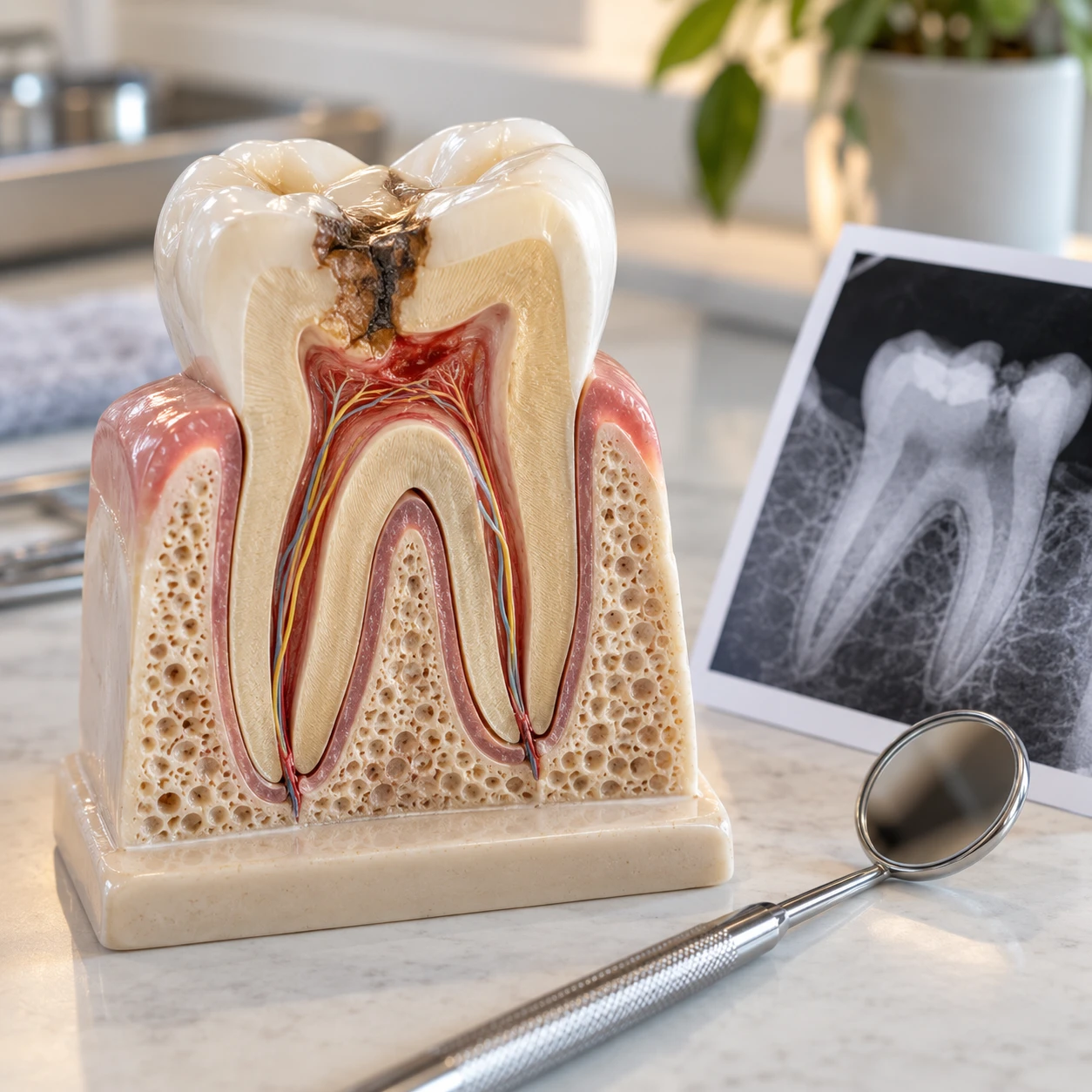
Inside a natural tooth is soft tissue known as the pulp.
When this tissue becomes significantly inflamed or infected, root canal treatment may be considered to treat the inside of the tooth while preserving the natural tooth when possible.
Problems can develop because of deep decay, cracks, trauma, previous dental treatment, or other damage.
Symptoms are not always the same from one person to another. You may notice:
This is often the question that matters most.
We do not assume that every painful or damaged tooth needs root canal therapy. Different dental problems can cause similar symptoms, and the right treatment depends on what is actually happening inside and around the tooth.
We examine the tooth and consider factors such as its structure, existing decay or restorations, cracks, your symptoms, the surrounding bone and gums, your bite, and relevant dental imaging. From there, we can discuss whether the tooth may be restored more conservatively, whether root canal treatment may help preserve it, or whether another treatment option should be considered.
Our goal is for you to understand why a treatment is being recommended before you decide to proceed.
Find Out Whether Your Tooth Can Be Saved
If you have already been told that you may need a root canal—or you are worried about a tooth that does not feel right—we can assess the problem and explain your options.
When root canal therapy is appropriate, we treat the damaged or infected tissue inside the tooth.
We numb the treatment area, access the internal portion of the tooth, clean and prepare the root canal system, and complete treatment based on the condition of the tooth.
The exact process can vary. Teeth have different numbers and configurations of canals, and some situations are more complex than others.
Before treatment begins, we explain the expected process and whether additional appointments may be required.
Our focus is not simply completing the root canal. We also consider what the tooth may need afterward so that the treatment fits into a complete restorative plan.
Fear of root canal treatment is common.
Sometimes that concern comes from a previous dental experience. Sometimes it comes from stories about root canals. And sometimes the tooth is already uncomfortable enough that the thought of treatment feels overwhelming.
We want you to tell us if you are anxious.
Not every toothache is an emergency, and not every painful tooth needs a root canal.
Persistent or worsening symptoms, however, deserve an assessment.
If discomfort is continuing, a tooth is becoming increasingly sensitive, swelling develops, or chewing becomes difficult, waiting for the problem to diagnose itself may only create more uncertainty.
Earlier assessment can help us determine what is causing the symptoms and what treatment options are still available.
If you are experiencing significant discomfort or a sudden change in a tooth, call us directly so we can discuss the appropriate next step.
Preserving the natural tooth is one of the main reasons root canal therapy may be recommended.
By treating the affected tissue inside the tooth, we may be able to retain a tooth that would otherwise continue to cause problems or eventually require removal.
Whether a tooth can be predictably restored depends on more than the root canal itself. We also consider the amount of healthy tooth structure that remains, cracks or fractures, periodontal support, your bite, and the restoration the tooth will require afterward.
If we believe the tooth cannot be predictably restored—or another treatment path makes more sense—we explain that as well.
We want the recommendation to reflect the condition of the tooth, not simply the fact that root canal therapy is available.
A root canal treats the inside of the tooth, but the tooth may still need restorative treatment afterward.
Depending on the location and condition of the tooth, we may recommend a filling or dental crown to restore and protect it.
We look at how much healthy structure remains, how heavily the tooth is used when you bite and chew, and whether additional protection is appropriate.
If a crown is recommended, we include it in the treatment discussion so you understand the full plan rather than discovering another step later.
That means your care may follow a pathway such as:
Your actual treatment plan will depend on your tooth.
The cost of a root canal in Cold Lake depends on the tooth and the complexity of treatment.
Front teeth, premolars, and molars can differ in their internal anatomy. The number and configuration of canals, the condition of the tooth, and the restoration required afterward may all affect the overall treatment plan.
Once we understand what the tooth requires, we can review the recommended care and provide an estimate.
We can also help you understand potential insurance coverage, preauthorization considerations, CDCP or NIHB details where applicable, expected out-of-pocket costs, and payment options that may be available.
Coverage varies between plans and programs, so we cannot guarantee what will be paid. What we can do is help make the financial information clearer before treatment moves forward.

We provide restorative dental care for patients in Cold Lake and surrounding Lakeland communities, including patients travelling from Bonnyville, St. Paul, Lac La Biche, and rural northeast Alberta.
Clear treatment planning is particularly important when dental care has to fit around shift work, military postings, family responsibilities, or travel.
When appropriate, we can coordinate your examination, dental imaging, root canal therapy, restoration, and follow-up within a clear treatment plan.
Some situations may benefit from referral. If that is appropriate for your tooth, we will explain why and help you understand the next step.
Our priority is not keeping every procedure in one office. It is helping you choose a treatment path that makes sense for your health and your tooth.
We assess your symptoms, examine the tooth, and use appropriate dental imaging when needed. We then determine whether the tissue inside the tooth appears significantly inflamed or infected and whether the tooth can reasonably be restored.
No. Tooth pain and sensitivity can have several causes. We need to diagnose the source before determining whether root canal therapy or another treatment is appropriate.
That is one of the main reasons we may recommend it. Whether the tooth can be successfully restored depends on its overall condition and the amount of healthy tooth structure remaining.
Treatment time varies depending on the tooth and complexity of the case. We explain the anticipated sequence once we have examined the tooth.
Possibly. Some root-canal-treated teeth benefit from a crown, while others may require a different restoration. We base our recommendation on the tooth’s location, condition, remaining structure, and function.
Tell us. We take dental anxiety seriously and can explain each step, discuss comfort considerations, and help you understand what to expect before treatment begins.
If you have been told you may need a root canal, or you have a painful, sensitive, or damaged tooth, you do not have to determine the solution yourself.
We can assess what is happening, explain whether root canal therapy may help preserve the tooth, and walk you through the treatment and restorative options available.
Book a Root Canal Assessment